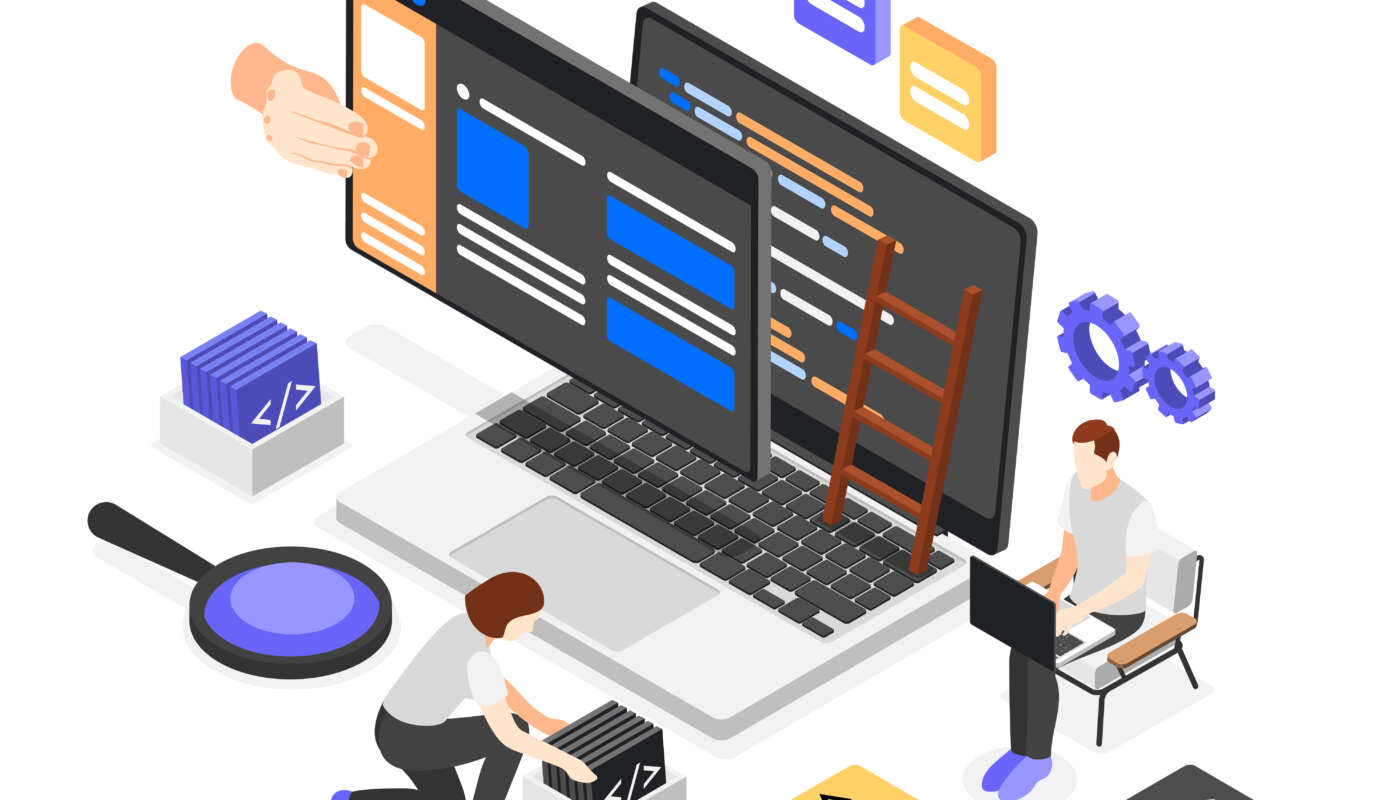
“Web design” and “web development” get used interchangeably all the time, even though they describe two genuinely different skill sets. If you’re planning a website project, understanding the difference will help you hire the right person, set realistic expectations, and avoid paying for work you didn’t actually need.
Web Design vs. Web Development, in One Sentence
Web design is about how a website looks and feels; web development is about how it actually works. A designer decides where the button goes and what color it is; a developer writes the code that makes clicking that button actually do something.
What Is Web Design?
Web design focuses on the visual layout, branding, and user experience of a website. It’s the planning and creative stage that typically happens before any code is written.
What Web Designers Actually Do
- Create the overall visual style: colors, fonts, imagery, and branding
- Design page layouts and wireframes that map out where content goes
- Plan the user experience (UX), making sure navigation feels intuitive
- Design for accessibility, so the site works well for users with disabilities
- Build mockups and prototypes, often in tools like Figma, before development begins
A good web designer thinks about how a visitor will move through a page: what they see first, what draws their eye to a call-to-action, and whether the layout feels cluttered or clear.
What Is Web Development?
Web development is the technical process of turning a design into a functioning website. Developers write the actual code that makes a site load, respond to clicks, and process information.
What Web Developers Actually Do
- Write the HTML, CSS, and JavaScript that bring a design to life in the browser
- Build back end systems that handle data, logins, and forms
- Set up hosting, databases, and security
- Test the site across browsers and devices to make sure it works reliably
- Maintain and update the site’s technical infrastructure over time
Development itself splits further into front end (what happens in the browser) and back end (what happens on the server) — a distinction covered in more depth in our guide to front end vs. back end development.
A Simple Analogy
Think about building a house. An architect designs the blueprint: the layout of rooms, where windows go, the overall style and feel of the home. That’s web design. The construction crew then takes that blueprint and actually builds the house, wiring the electricity, plumbing the pipes, and pouring the foundation. That’s web development. You need both to end up with a house you can actually live in, and the same is true for a website you can actually use.
Do You Need a Designer, a Developer, or Both?
For most website projects, you’ll need elements of both design and development, though the balance depends on the project:
Mostly Design-Focused Projects
A rebrand of an existing, functional website, where the layout and content structure mostly work but the look feels dated, might lean heavily on design work with minimal development changes.
Mostly Development-Focused Projects
Adding a new back end feature, like an online booking system or a customer portal, to an existing, well-designed site leans heavily on development with limited new design work.
Full Website Builds
A brand-new website from scratch needs both: design to establish the visual direction and user experience, and development to actually build and launch it. This is why many agencies handle both under one roof, so the two stages stay coordinated instead of getting handed off and losing details in translation.
Why the Distinction Matters When Hiring
Confusing these two roles leads to real problems. Hiring a talented designer to build a site with complex back end functionality, like e-commerce or user accounts, can leave you with a beautiful site that doesn’t actually function well. Conversely, hiring a strong developer without design input can result in a technically solid site that looks generic or feels hard to navigate.
When evaluating a freelancer or agency, ask directly: are you handling the design, the development, or both? A full-service agency should be able to explain clearly who does what and how the two stages hand off to each other.
Where the Two Disciplines Overlap
Even though design and development are distinct skill sets, the best results happen when they inform each other throughout a project rather than getting handled in complete isolation. A designer who understands basic technical constraints, like how images affect load speed or how certain layouts translate poorly to mobile, will produce mockups that developers can actually build efficiently. Likewise, a developer with an eye for design can flag when a technically sound build feels visually flat or hard to navigate before it ever reaches customers.
This is part of why the hand-off between design and development is often the riskiest point in a website project. Details get lost when a mockup is passed to a developer with no context, or when a developer makes technical decisions that quietly compromise the original design intent. Coordinated teams, or professionals fluent in both areas, tend to catch these gaps before they become expensive to fix.
Frequently Asked Questions
Can one person do both web design and web development?
Yes, some professionals, often called full stack designers or developers, handle both. It’s more common at smaller agencies or for smaller projects. Larger or more complex projects typically benefit from specialists in each area working together.
Which comes first, design or development?
Design typically comes first. A designer establishes the layout, branding, and user experience, usually through mockups, before a developer builds the functional site based on that design.
Is web design more expensive than web development, or vice versa?
Costs vary by project, not by category. A highly custom design with extensive branding work can cost more than straightforward development, and a complex back end build (like e-commerce or custom integrations) can cost more than a simple design refresh. It depends entirely on project scope.
Understanding this distinction makes it much easier to scope a project accurately, communicate clearly with whoever you hire, and avoid paying for the wrong type of work.