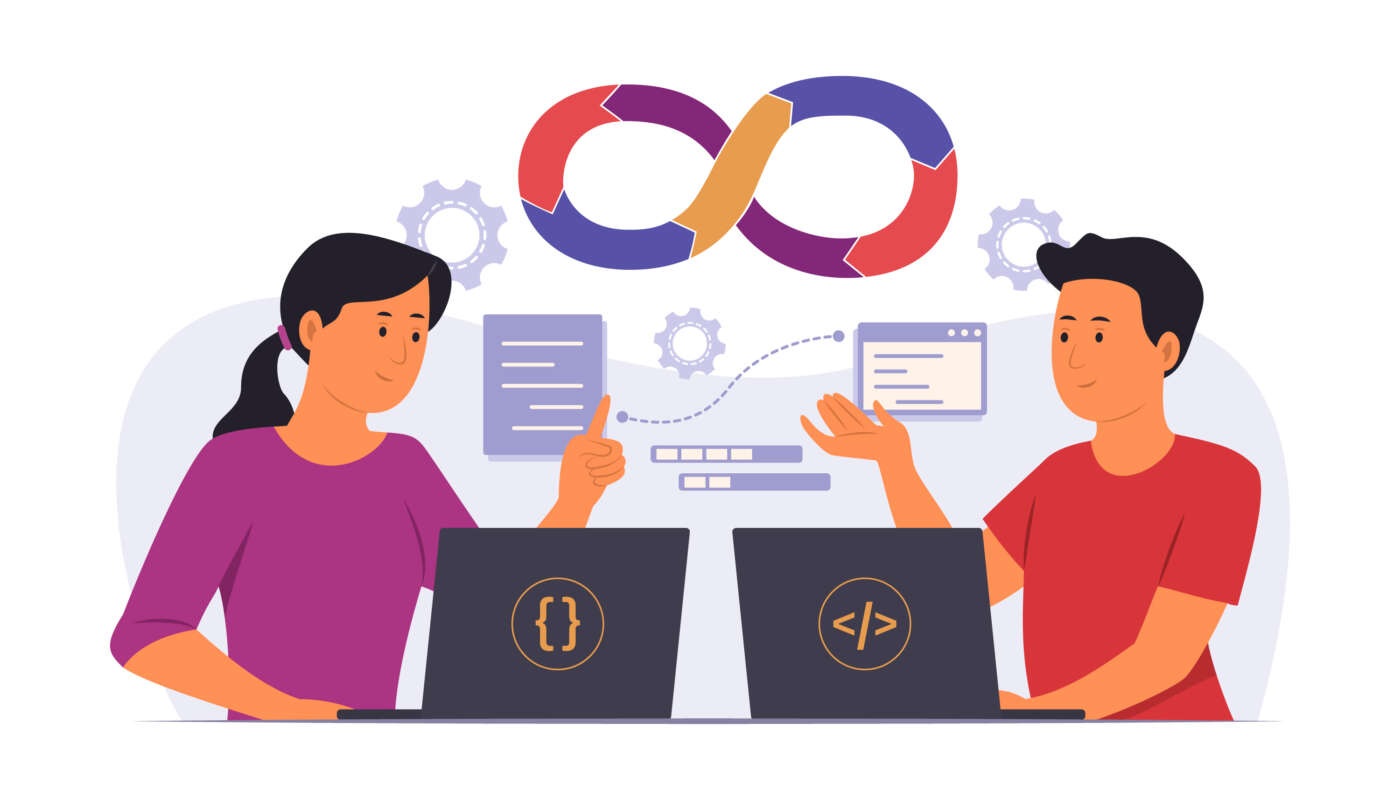
If you’ve ever hired a web developer, requested a quote, or read a job posting for “front end developer” or “back end developer,” you’ve probably wondered what the difference actually is. It sounds technical, but the concept is pretty simple once you break it down.
In this guide, we’ll explain front end vs. back end development in plain language, show you real examples, and help you understand which one your business actually needs (spoiler: usually both).
What Is Front End Development?
Front end development is everything you see and interact with on a website. The buttons you click, the images you scroll past, the menu that drops down when you hover over it, the way text resizes on your phone versus your laptop — all of that is front end.
Think of it like the dining room of a restaurant. It’s the part customers actually experience: the table settings, the lighting, the menu design, how easy it is to flag down a server. A front end developer’s job is to make sure that experience looks good and works smoothly, no matter what device someone is using.
What Front End Developers Actually Build
- Page layouts and navigation menus
- Buttons, forms, and interactive elements
- Animations and visual transitions
- Mobile-responsive designs that adjust to screen size
- The overall look and feel of a brand’s website
The Tools of the Trade
Front end developers typically work with three core languages: HTML (which structures the content), CSS (which handles styling and layout), and JavaScript (which adds interactivity, like a dropdown menu or a live search bar). Many also use frameworks like React or Vue to build more complex, app-like websites faster.
What Is Back End Development?
Back end development is everything happening behind the scenes that makes a website actually function. It’s the part users never see directly, but rely on constantly. If front end is the dining room, back end is the kitchen: the ovens, the recipes, the inventory system tracking how much flour is left.
When someone submits a contact form, logs into an account, or completes a purchase, back end code is what processes that request, checks it against a database, and sends the right response.
What Back End Developers Actually Build
- Servers that host and run the website
- Databases that store customer data, orders, or content
- APIs that let the front end and back end communicate
- User authentication and login systems
- Payment processing and security logic
The Tools of the Trade
Back end developers work with server-side languages like Python, PHP, Ruby, or Node.js, along with database systems like MySQL or MongoDB. None of this is visible to a site visitor, but without it, a website is just a static brochure with no memory and no ability to process anything.
Front End vs. Back End: A Side-by-Side Comparison
Here’s a simple way to think about the split:
- Front end = what users see and click on
- Back end = what makes those clicks actually do something
- Front end runs in the browser; back end runs on a server
- Front end focuses on design and user experience; back end focuses on data, logic, and security
Neither one works well without the other. A beautifully designed website with no back end can’t process an order. A powerful back end with a clunky front end will frustrate visitors before they ever see what the site can do.
What About Full Stack Developers?
A full stack developer works on both front end and back end. They can build the visual layout of a page and also write the server-side code that powers it. Full stack developers are common at smaller agencies and startups, where one person (or a small team) needs to handle a website end to end rather than specializing in just one side.
Which One Does Your Business Need?
If you’re a small business owner trying to figure out what your website actually needs, here’s the honest answer: it depends on how much your site does.
A Simple Brochure Website
If your site is mostly informational (a homepage, an about page, a services page, and a contact form), you’ll lean heavily on front end work, with just enough back end to handle form submissions and hosting.
A Website With Logins, Bookings, or E-Commerce
If customers need to create accounts, book appointments, make payments, or search a product catalog, you need solid back end development to handle that data securely, in addition to a front end that makes it easy to use.
This is exactly why most professional web design projects involve both types of developers, or a full stack team, working together from day one instead of treating design and functionality as separate afterthoughts.
Frequently Asked Questions
Is front end or back end development harder to learn?
Neither is objectively harder — they require different types of thinking. Front end tends to reward visual and design instincts, while back end rewards logical, systems-level thinking. Many developers find one comes more naturally, which is why specialization is common.
Can a website work with only front end code?
Yes, but only for static pages with no forms, logins, or dynamic content. The moment you need a contact form to actually send an email or a page to pull in live data, you need some back end functionality.
Do I need to hire two separate developers?
Not necessarily. Many agencies, including full stack teams, handle both sides under one roof, which is often simpler and more cost-effective for small businesses than coordinating two separate freelancers.
Whether your website needs a simple front end refresh or a full front-to-back rebuild, understanding this split makes it a lot easier to have productive conversations with whoever builds it.